

Description
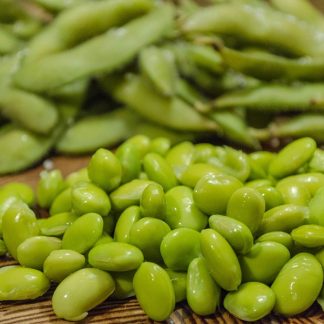
Organic Soya bean. Glycine max.
Soya beans are annual legumes, growing to a height of 50cms. They fix atmospheric nitrogen and have a very high protein content. Not supposedly suitable for latitudes over 52N (in Ireland we range from 51.9N in cork to 55N in Portrush), but, and, since they are one of the worlds most important protein sources, i thought, with our special climate, we might give it a go! Also global warming may favour soya beans this far north, the main problems seem to be finding a variety to work around their phototrophic switches and coping with cold dampness.
In 2018 the first soya bean crop was grown commercially in Ireland, for those nerdy like me here’s their video link.
https://site-53316381.bcvp0rtal.com/detail/video/6254007502001/the-first-soya-beans-harvest-on-irish-soil
How to grow:
Best grown in soil over pH5.5 and at temperatures between 20C and 35C although they can withstand as low as 10C. Sow once the soil has warmed up, into a well prepared seed bed, about 10cms apart and 1cm deep. You can start them off in pots inside on heat to extend the season. They can take up to 6 months to mature. Put them into your legume slot in your crop rotation and avoid brassicas after for 2 years – as a normal precaution (see video). Further, soya beans have a specific nitrogen fixing bacteria, so apparently when you grow them on the same ground a few years in a row, the bacteria multiply and subsequent crop yield increases. From https://tropical.theferns.info/viewtropical.php?id=Glycine+max.
Personally, i’ve not grown this yet in Co Down 54N, (as of winter 2025). So here’s a challenge and i’d be very interested to hear your stories about this one fellow growers and gardeners. I’ll be trying it myself in 2026.
Problem solving:
They do best regularly, but not excessively, watered at their base. Sow in a moderately sheltered but airy, warm, sunny spot. Protect from frost and mice etc.
Favourite ways to eat them:
Being an ancient crop, there are many ways to process and eat them. The mature seed needs heated, or soaked and sprouted or fermented to destroy natural chemical inhibitors and so allow for protein absorption. Immature seed can be eaten raw.
Cultural history:
An ancient crop, one of the oldest we cultivated thousands of years ago with evidence coming from China. It seems the wild soya bean was smaller and bred to be larger over the millennia, originating from East Asia, it is a plant from temperate regions.
Avg contents: 100 seeds.



Reviews
There are no reviews yet.